
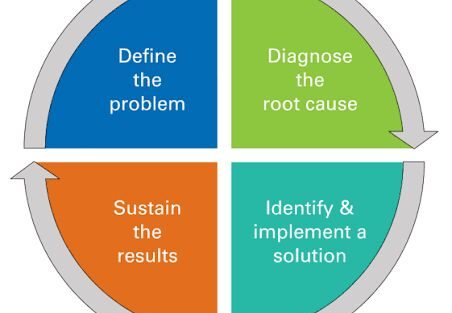
How to Transform Business Problems into Requirements Quickly.
Most business problems never become good requirements not because they’re too complex, but because nobody slows down long enough to ask the right questions. Here’s how to close that gap, fast.
Every IT project starts the same way: someone walks into a room, frustrated, and drops a problem on the table. “The system is too slow.” “Sales can’t track their pipeline.” “Customers keep complaining.” And the clock starts ticking. Your job as a Business Analyst is to transform that raw, emotional, half-formed problem into crisp, actionable requirements before the project spins out of control.
This isn’t a theoretical exercise. It’s survival. Here’s the real-world framework that actually works.
1. Stop Solving. Start Listening.
The single biggest mistake BAs make is jumping straight into solution mode. A stakeholder says “we need a new dashboard” and suddenly everyone’s wireframing. Wrong move.
| The Rule | Treat every stakeholder statement as a symptom, not a diagnosis. Your first job is to uncover the underlying pain, not prescribe medicine. |
Ask open-ended questions and resist the urge to fill silence with your own assumptions. Use prompts like: “Walk me through what happens today…” or “What does ‘slow’ actually cost you each week?” Let them talk. The real problem is usually three layers deeper than the first complaint.
2. Frame the Problem in Business Terms
Once you understand the pain, articulate it in business language not technical language. A problem statement written in business terms keeps stakeholders aligned and prevents scope creep driven by IT assumptions.
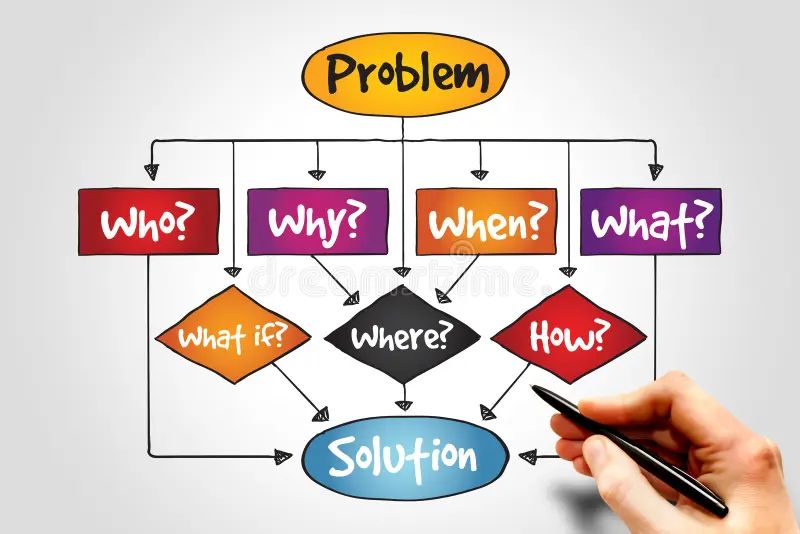
| Use this simple structure: | WHO | WHAT | WHY | WHEN |
| Is anyone affected, and in what role? | Is it going wrong or not happening? | Does it matter (business impact) | Does this occur always, or under specific conditions? |
A well-framed problem statement sounds like: “The Sales Operations team cannot generate accurate weekly pipeline reports without manually combining data from three systems, resulting in 6–8 hours of lost productivity per week and frequent forecasting errors that affect executive decisions.”
(No mention of databases, APIs, or software. Just impact. Keep it there.)
3. Use the “5 Whys” to Find the Root Cause.
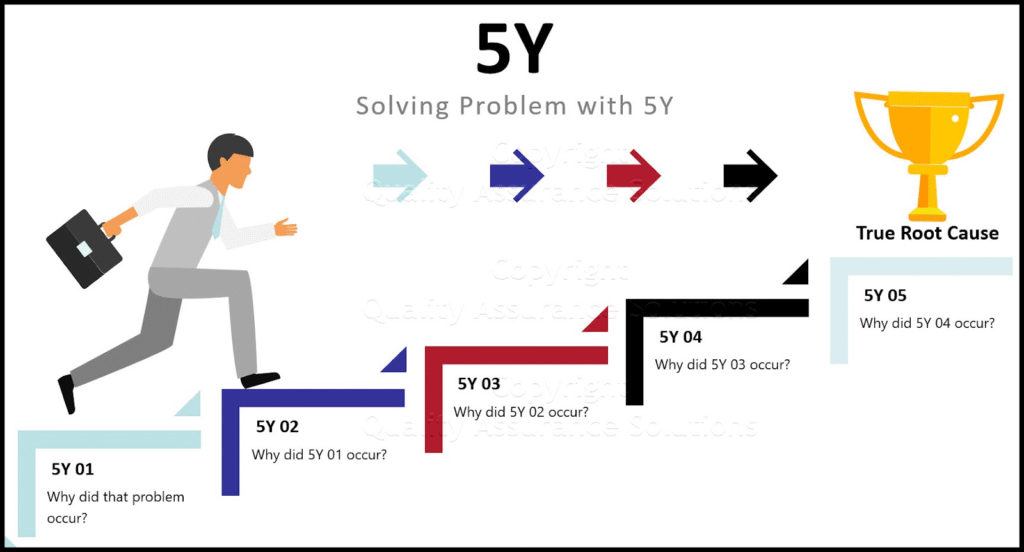
Start with the problem statement and ask “Why does this happen?” five times in sequence. Each answer becomes the input to the next question. By the fifth iteration, you’re usually at the real root cause and it’s rarely where stakeholders originally pointed.
| Example “Reports are inaccurate” → Why? Data from three systems doesn’t sync → Why? No integration layer exists → Why? Budget was cut in 2022 → Why? No business case was made → Root cause: lack of a governed data integration strategy. |
Now you’re solving a data governance problem not a reporting problem. That changes everything: scope, stakeholders, and the right requirements.
4. Define Requirements Using the SMART-BA Method.
Good requirements are not wish lists. They are precise, testable statements of what a system or process must do. Use the SMART-BA framework as your quality filter:
| Criterion | What It Means | Test Question |
| Specific | Clear scope, no ambiguity | Could two people read this differently? |
| Measurable | Includes success criteria | How will we know it’s done? |
| Achievable | Feasible within constraints | Is this technically and financially realistic? |
| Relevant | Directly linked to the business problem | Does this trace back to the root cause? |
| Testable | Can be verified via acceptance criteria | Can QA write a test case for this? |
5. Prioritise Ruthlessly with MoSCoW.
Once you have a list of solid requirements, stakeholders will treat them all as equally urgent. They’re not. Apply MoSCoW prioritisation in a workshop setting with stakeholders in the room to force honest conversations about what truly matters.
| Must Have | Non-negotiable. The project fails without this |
| Should Have | High value, but there’s a workaround if deferred. |
| Could Have | Nice to have. Only if time and budget allow. |
| Won’t Have | Out of scope now. Captured for the future. |
A common rule: if more than 60% of your requirements are “Must Have,” the scope is out of control. Push back, challenge assumptions, and reclassify. Good BAs protect delivery by guarding scope.
6. Validate Before You Proceed.
Requirements written in a room without stakeholder sign-off are just opinions. Before any development begins, take your documented requirements back to the business owners for a formal walkthrough. Not an email. A conversation.
The validation checkpoint should confirm:
- The business problem statement is accurate and agreed upon.
- Requirements trace directly to the problem.
- Acceptance criteria are clear and stakeholders can articulate how they’d test each requirement.
- Priorities are signed off by the decision-maker, not just the loudest voice in the room.

Final Thoughts
The ability to transform business problems into requirements quickly is what separates a documentation writer from a true Business Analyst. Tools matter. Templates matter. Frameworks matter.
But understanding the business problem always comes first. Because when you understand the problem deeply, writing requirements becomes easier, faster, and far more valuable.