How to Measure User Adoption as a Business Analyst: A Stepwise Approach

A solution can be delivered but the true measure of its success is the extent to which it is used. A lot of Business Analysts rejoice when the solution is implemented. But that is just the beginning, nothing is achieved until the employees stop using spreadsheets in place of ERP or customers get to a

How to Measure User Adoption as a Business Analyst: A Stepwise Approach Read More »

IMG 20260516 WA00081 1

How to Transform Business Problems into Requirements Quickly.

How to Transform Business Problems into Requirements Quickly. Most business problems never become good requirements not because they’re too complex, but because nobody slows down long enough to ask the right questions. Here’s how to close that gap, fast.  Every IT project starts the same way: someone walks into a room, frustrated, and drops a

How to Transform Business Problems into Requirements Quickly. Read More »

Image 5 E1761921199885

How to write effective User Stories: My Simple Approach

Have you ever joined a sprint planning session and realized that everyone has a different idea of what the feature is supposed to do?Yes – I have been there too. That’s usually where unclear user stories are the culprit. The truth is, effective user stories are the backbone of smooth product development. When written well,

How to write effective User Stories: My Simple Approach Read More »

DMAIC 1024x576

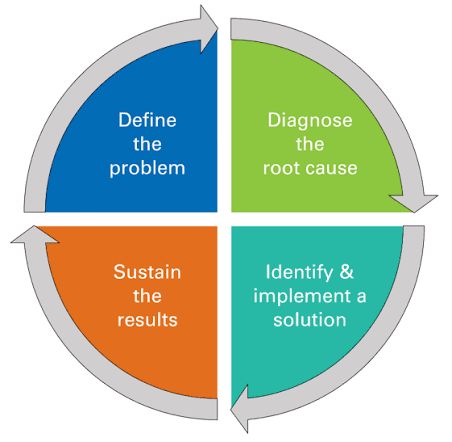
How to Apply DMAIC – Lean Six Sigma Methodology to Improve a Business Process

🎵 D-M-A-I-C, that’s just the tool for me To solve problems and boost efficiency It’s D-M-A-I-C! 🎵 One of our super powers as Business Analysts is the ability to solve problems in a structured and efficient way. And we do this by using a dynamic range of tools and methodologies. The one we want to

How to Apply DMAIC – Lean Six Sigma Methodology to Improve a Business Process Read More »

Image 4 1024x576

Understanding and Documenting Business Problems as a BA. 

  As a Business Analyst, one of our primary task is to facilitate the process of defining the right problem. A well-defined problem statement is the compass for the entire project. Misunderstanding the core issue leads to building an elegant solution to the wrong challenge, wasting time, budget, and credibility. This foundational step is critical:

Understanding and Documenting Business Problems as a BA.  Read More »

1 1024x576

Why Business Analysts Need Design Thinking in Their Toolkit

At its core, design thinking is a structured way to solve problems by putting people at the center of the process. It’s an approach that asks us to pause before rushing into requirements gathering or solution design and instead start with empathy: What are our users really experiencing? This process, popularised by IDEO and now

Why Business Analysts Need Design Thinking in Their Toolkit Read More »

Image 3 E1757412736593

5 BA TECHNIQUES THAT CAN REDUCE PROJECT FAILURE RATE.

The five(5) BA technique that reduce project failure rate are 1. Understanding the Landscape: Stakeholder Analysis & Engagement :  Before any requirements or risks can be managed, you need to know who your stakeholders are and what they care about. Effective stakeholder engagement means identifying the right people, understanding their needs, and keeping them involved

5 BA TECHNIQUES THAT CAN REDUCE PROJECT FAILURE RATE. Read More »

Image 1 E1757488104773

From Insight to Implementation: Bridging the Gap Between Vision and Delivery

Change they say is inevitable, the world is changing daily and so does the technological approach and practice required to cater for this change. In today’s digital world, businesses are consistently seeking ways to transform ideas into impactful solutions, but the fact remains that transforming a brilliant insight into a working system is not just

From Insight to Implementation: Bridging the Gap Between Vision and Delivery Read More »

Requirements Elicitation Workshop2 1024x536

How to Run an Effective Requirements Elicitation Workshop

As Business Analysts, one of the most valuable things we do is bring stakeholders together to define and agree requirements. Workshops are one of the best ways to do this, they create shared understanding, reduce miscommunication, and help uncover insights that 1-1 interviews may miss. But running an effective workshop isn’t as simple as booking

How to Run an Effective Requirements Elicitation Workshop Read More »

Form Submission is not open yet. Do check back